
Learning how to find a cheap storage unit near you takes more than choosing the lowest advertised monthly rate. The right unit should fit your belongings, budget, access needs, and expected rental period without leaving you with unnecessary space or surprise costs.
A little preparation can make the comparison much easier. Start by estimating what you need to store, review common storage unit sizes, and compare the full rental cost instead of focusing only on the first payment. This guide explains what to look for before you reserve or rent.
Table of Contents
- How to Find a Cheap Storage Unit Near You Without Overpaying
- 1. Estimate What You Need to Store
- 2. Compare Common Storage Unit Sizes
- 3. Compare the Full Storage Rental Costs
- 4. Review Storage Unit Discounts Carefully
- 5. Compare Location and Access
- 6. Match Features to What You Are Storing
- 7. Read the Rental Terms and Reviews
- 8. Ask Questions Before Renting
- Common Mistakes When Looking for Affordable Storage
- FAQs
- Find a Cheap Storage Unit Near You with a Clear Comparison
How to Find a Cheap Storage Unit Near You Without Overpaying
Affordable self storage should give you enough room for your belongings while keeping the terms and ongoing costs manageable. A very low introductory rate may be useful, but it does not automatically make one unit the best long-term value.
Before comparing facilities, answer these questions:
- What items will go into storage?
- How long do you expect to rent?
- How often will you visit the unit?
- Do you need room for a walkway or shelving?
- Are any items sensitive to temperature or humidity?
- Which fees or coverage requirements apply?
- How far are you willing to travel?
Writing down your answers will help you compare similar units instead of making a decision based on price alone.
1. Estimate What You Need to Store
Begin with a basic inventory. List furniture, appliances, boxes, seasonal items, hobby equipment, business supplies, and anything else you plan to store.
Measure large pieces, including:
- Sofas and sectionals
- Bed frames and mattresses
- Dining tables
- Dressers and bookcases
- Appliances
- Outdoor equipment
- Business inventory or shelving
You do not need to calculate the exact cubic volume of every item. Measurements are most useful for confirming that oversized belongings will fit through the unit entrance and inside the available floor space.
Also consider whether furniture can be disassembled. Removing table legs, bed frames, shelves, or other removable parts may reduce the amount of space you need.
Finally, decide how tightly you can pack. If you will rarely visit, belongings may fit more closely together. If you need regular access, allow room for an aisle and keep frequently used items near the entrance.
2. Compare Common Storage Unit Sizes
| Unit Size | Floor Space | May Work For | Example Items |
|---|---|---|---|
| 5x5 | 25 sq. ft. | A small closet or limited household storage | Boxes, seasonal decorations, small furniture, sports equipment, lamps, or compact shelving |
| 5x10 | 50 sq. ft. | A studio or small one-bedroom space when packed efficiently | A mattress and bed frame, small sofa, dresser, bicycles, small appliances, and several boxes |
| 10x10 | 100 sq. ft. | Furniture and boxes from a one- or two-bedroom living space | Living room furniture, bedroom furniture, dining pieces, appliances, and household boxes |
| 10x15 | 150 sq. ft. | A larger apartment, household transition, move, or renovation | Multiple bedroom sets, a larger sofa, dining furniture, appliances, outdoor equipment, and boxes |
| 10x20 | 200 sq. ft. | A multi-bedroom home, larger equipment, or business inventory | Several rooms of furniture, major appliances, garage contents, shelving, inventory, and boxes |
| 10x25 or 10x30 | 250 to 300 sq. ft. | A major household move, oversized belongings, or larger business inventory | Large furniture collections, appliances, equipment, inventory, and numerous boxes |
Availability and dimensions vary by property. Measure oversized belongings and confirm the specific unit dimensions, door size, access type, and storage rules before renting.
Storage unit sizes vary by property, and the amount each unit holds depends on item dimensions, packing methods, ceiling height, and the layout of the space. Treat size examples as planning estimates rather than guarantees.
Choosing the correct size is one of the most reliable ways to find a cheap storage unit near you without paying for unused space.
5x5 Storage Unit
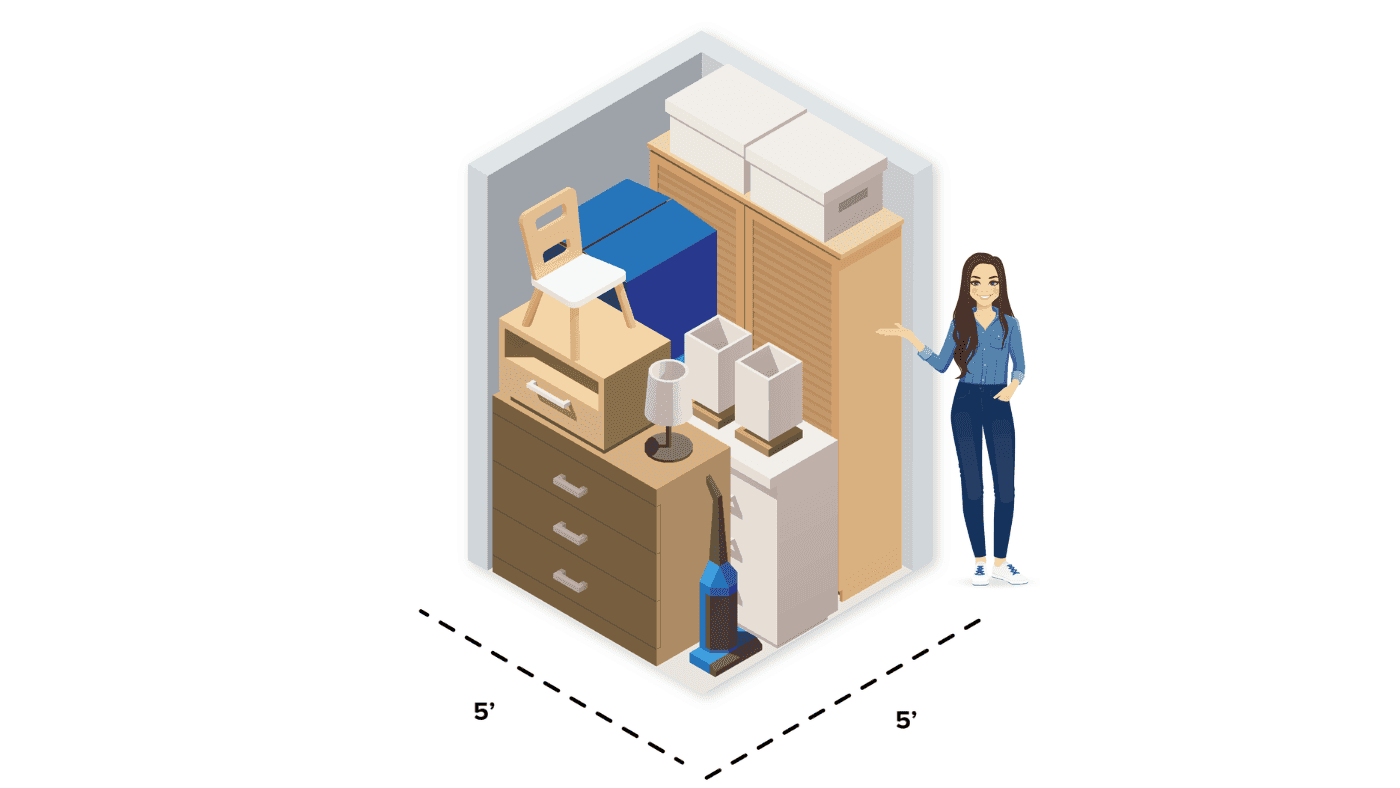
A 5x5 unit is approximately the size of a small closet. It may work for boxes, small furniture, seasonal decorations, sports equipment, or the contents of a limited storage area.
Possible items include:
- Several medium boxes
- A small desk and chair
- Lamps or side tables
- Compact shelving
- Seasonal clothing
- Sports or hobby equipment
This size may be useful when you need a little extra room but are not storing the contents of an entire apartment.
5x10 Storage Unit
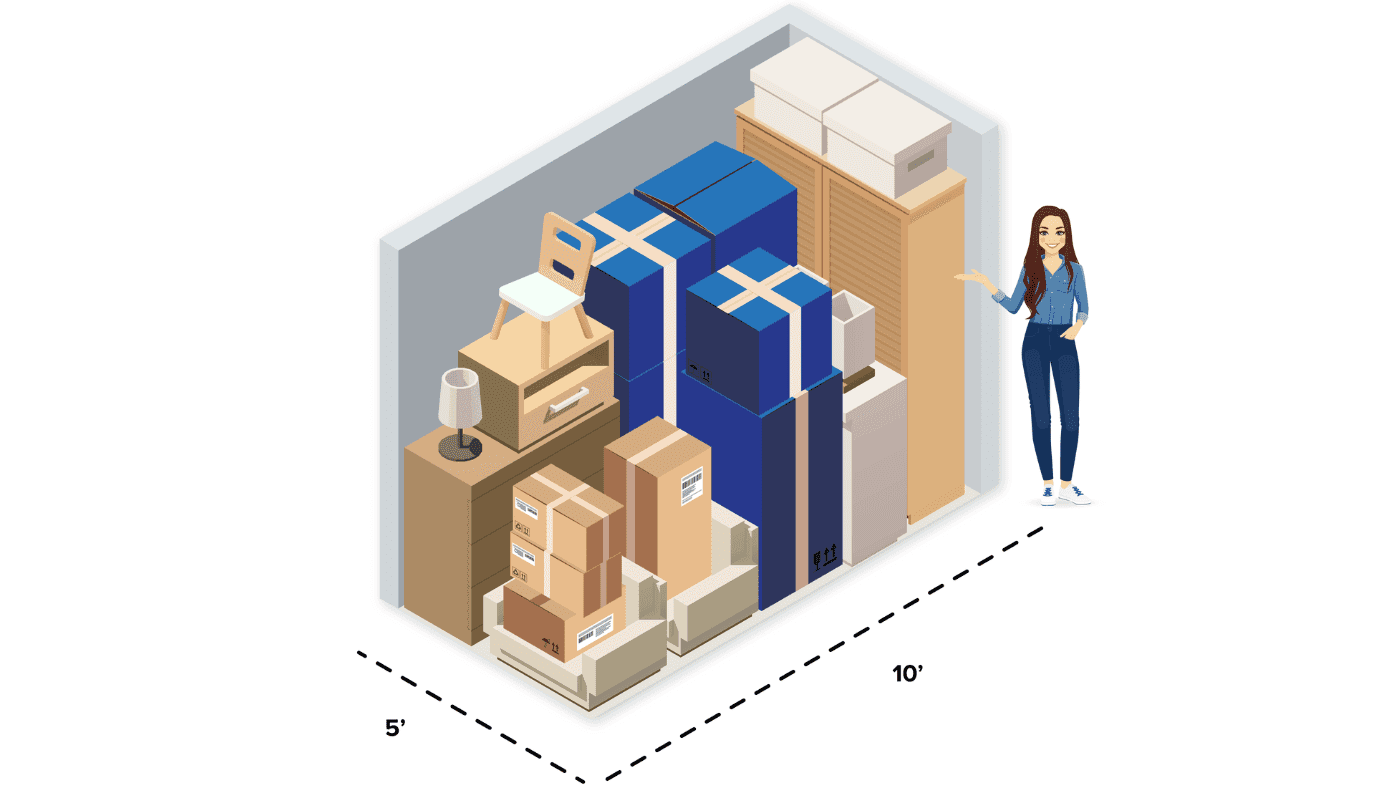
A 5x10 unit provides roughly twice the floor space of a 5x5. It may hold the contents of a studio or small one-bedroom space when items are packed efficiently.
Possible items include:
- A mattress and bed frame
- A small sofa or loveseat
- A dresser
- Bicycles
- Small appliances
- Multiple boxes
Measure larger furniture before relying on a general size description.
10x10 Storage Unit
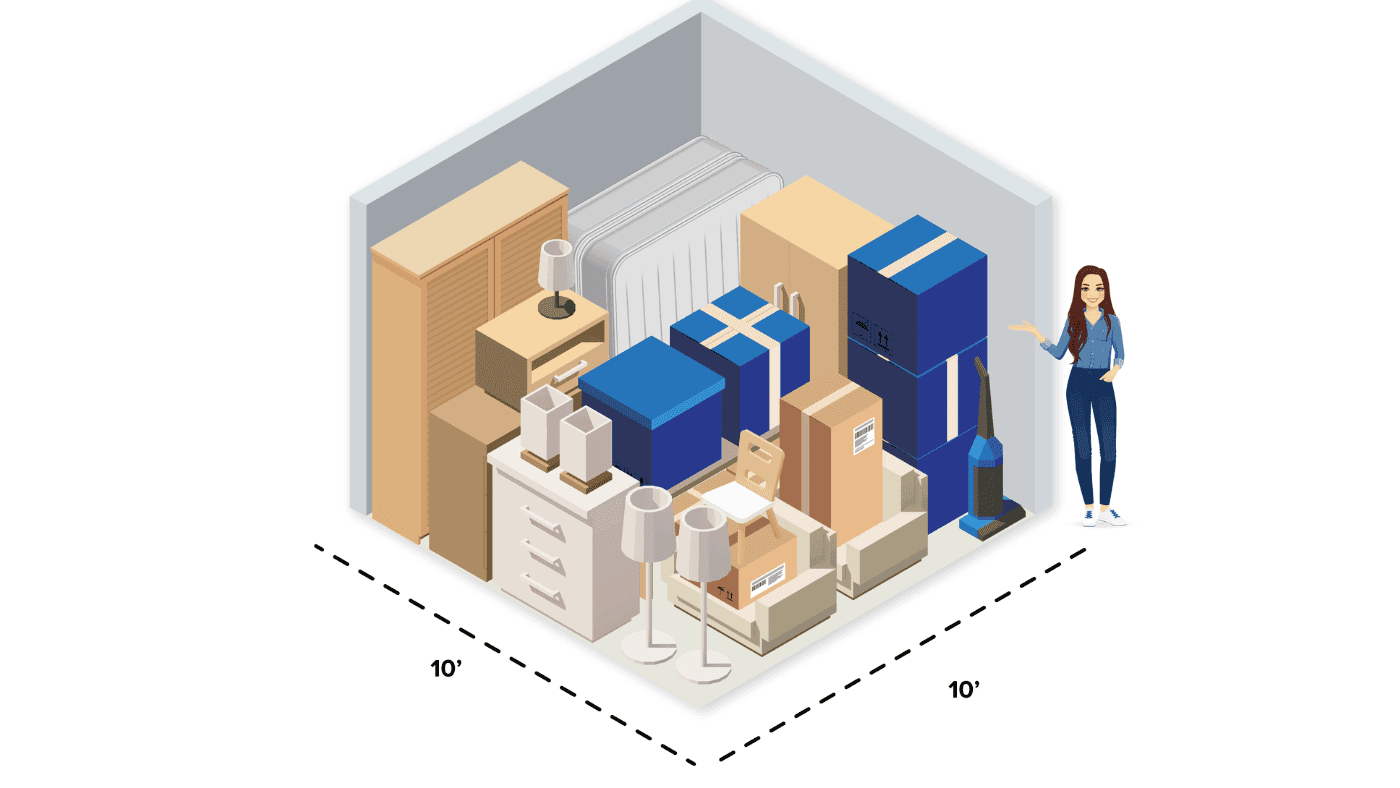
A 10x10 unit is often compared with a small bedroom. It may work for furniture and boxes from a one- or two-bedroom living space, depending on the size and quantity of the belongings.
Possible items include:
- Living room furniture
- One or two bedroom sets
- Dining furniture
- Appliances
- Boxes and household supplies
If you need to retrieve items regularly, do not plan around filling every inch. Leave a narrow path through the unit.
10x15 Storage Unit
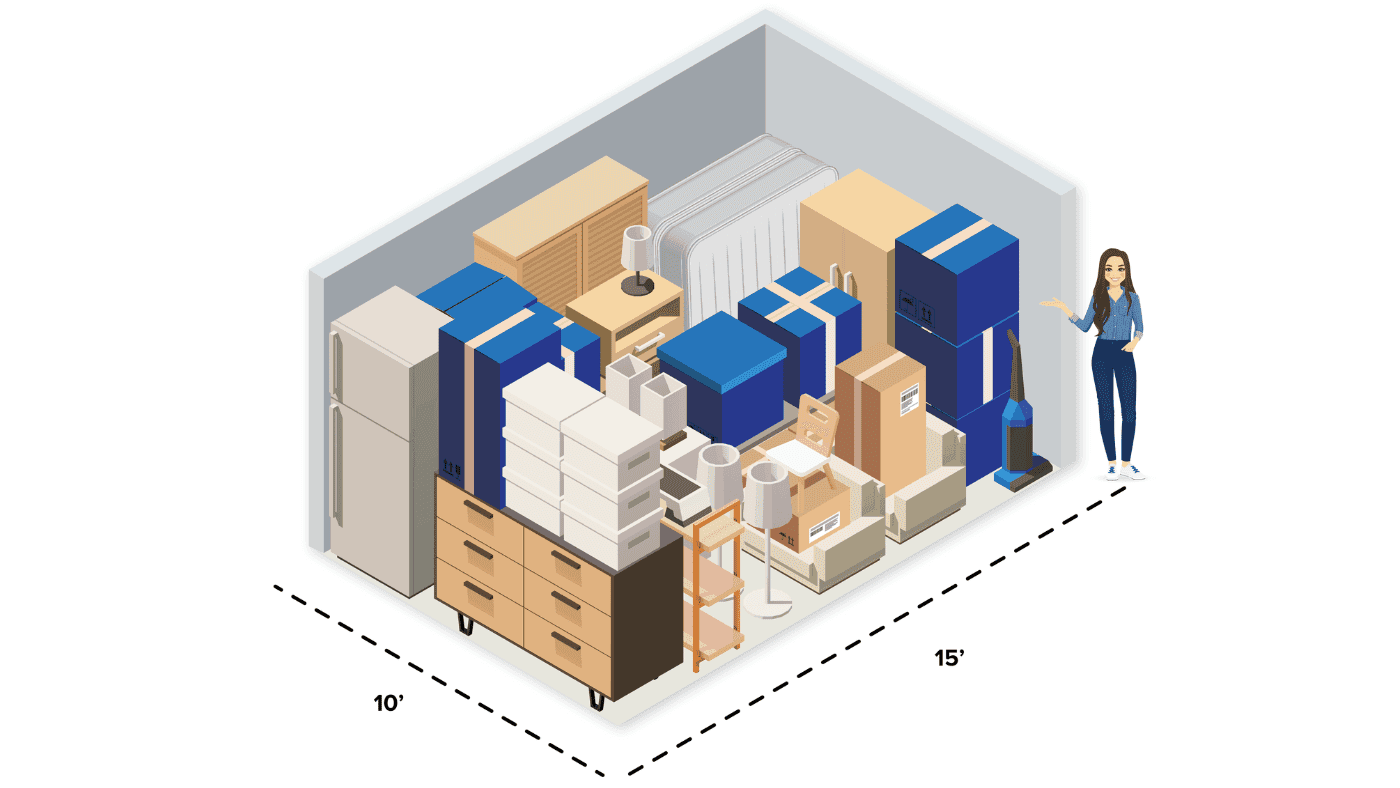
A 10x15 unit offers additional space for larger furniture, appliances, and a greater number of boxes. It may be useful during a move, renovation, or household transition.
Possible items include:
- Multiple bedroom sets
- A larger sofa
- Dining furniture
- Major appliances
- Garage or outdoor equipment
- Numerous boxes
Vehicle storage rules differ by facility. Confirm permitted vehicle types, documentation, condition requirements, and unit dimensions before assuming a vehicle will fit.
10x20 Storage Unit
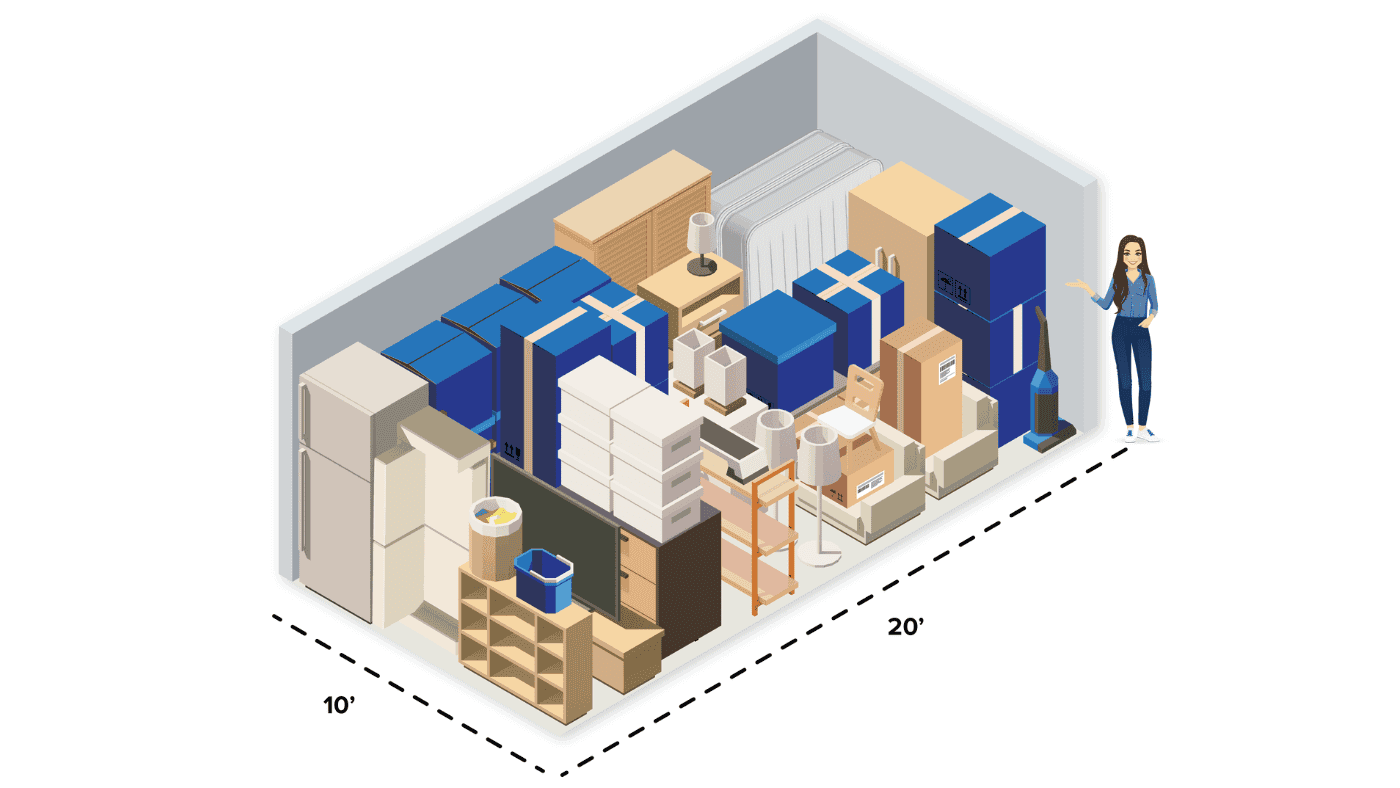
A 10x20 unit is often compared with a one-car garage. It may accommodate belongings from a multi-bedroom home, larger equipment, or business inventory.
Possible items include:
- Several rooms of furniture
- Large appliances
- Garage contents
- Business supplies
- Shelving and inventory
- Many boxes
Availability, ceiling height, door size, and access type vary, so review the details of the specific unit.
10x25 and 10x30 Storage Units
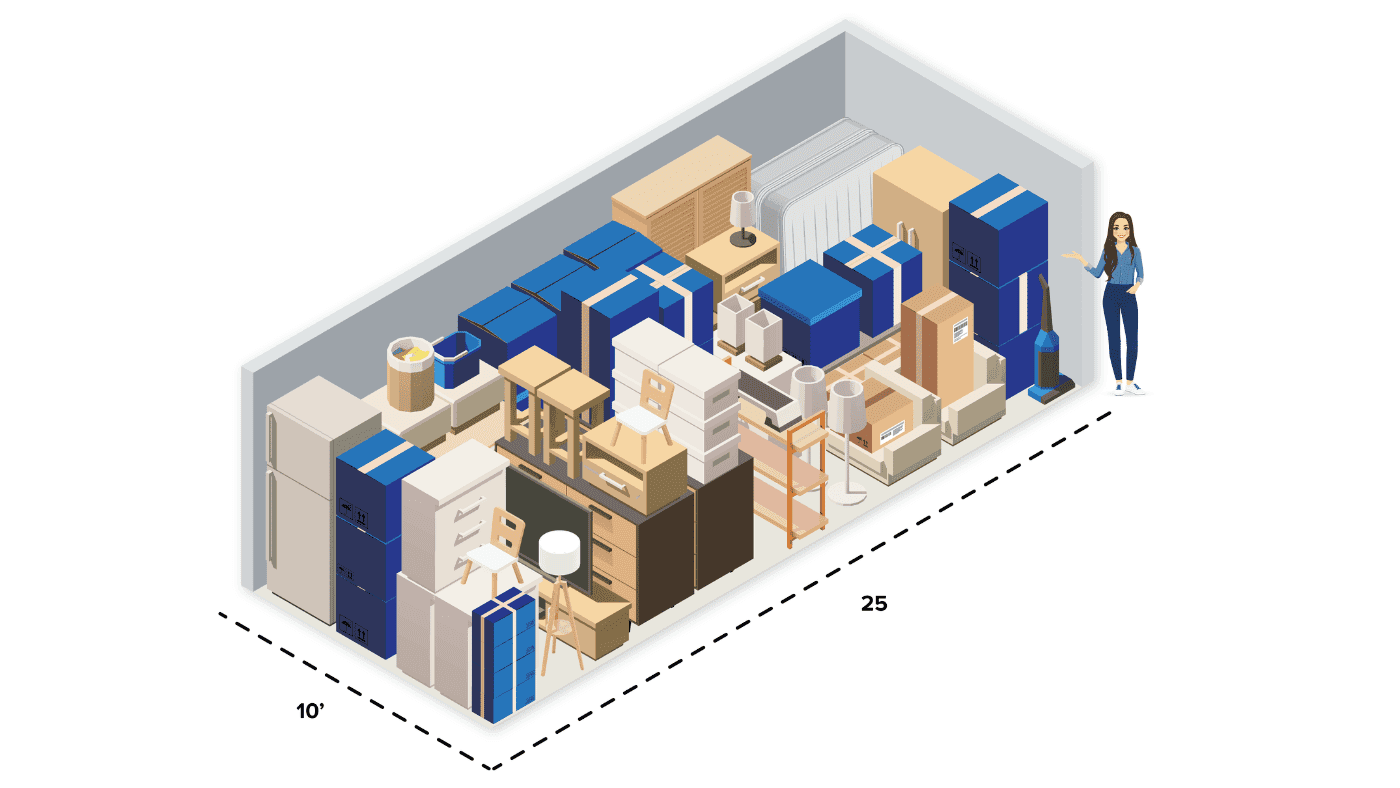
Larger units may support major household moves, business inventory, or oversized belongings. These sizes are not available at every facility, and the usable layout may differ even when the listed dimensions are similar.
Before renting a large unit, ask whether a smaller unit with a more organized layout would meet your needs. Paying for unused floor space can increase storage rental costs over time.
3. Compare the Full Storage Rental Costs
To compare storage prices accurately, look beyond the advertised monthly rate. Ask for the total amount due at move-in and the expected ongoing monthly payment.
Potential charges may include:
- Monthly rent
- Administrative or setup fees
- Lock purchase
- Insurance or tenant protection
- Applicable taxes
- Required deposits
- Optional supplies or services
Not every facility charges the same fees. Request a clear explanation before completing the rental.
Also ask whether the displayed rate is introductory or ongoing. If a promotion ends after a set period, write down the regular monthly rate so you can compare the longer-term cost.
For example, a lower first payment may not be the least expensive choice over six or twelve months. Calculate the expected total for the period you realistically plan to rent.
4. Review Storage Unit Discounts Carefully
Storage unit discounts can reduce the initial cost, but availability and eligibility vary. Promotions may apply only to selected unit sizes, new renters, online rentals, or a limited number of months.
Possible offers may include:
- A reduced first month
- A percentage discount for a set period
- Online rental savings
- Prepayment options
- Referral programs
- Group discounts, when offered
- Waived administrative fees
Ask whether the promotion applies to the exact unit you are considering. Confirm when it ends, what the regular rate will be, and whether any minimum-stay or payment requirements apply.
Do not choose a unit solely because of a promotion. The size, location, terms, and total cost should still fit your needs.
5. Compare Location and Access
Location can affect both price and convenience. A unit farther away may have a lower monthly rate, but regular trips can add travel time and fuel costs.
Consider:
- Distance from home, work, or school
- How often you expect to visit
- Property access hours
- Building or gate access instructions
- Ease of loading and unloading
- Traffic and travel time
- Whether the unit is indoors or drive-up
- Elevator or hallway access, when applicable
The cheapest location may work well for long-term items you rarely need. A closer location may provide better value for business inventory, moving supplies, or belongings you access frequently.
When deciding how to find a cheap storage unit near you, include the practical cost of each visit in your comparison.
6. Match Features to What You Are Storing
Features and unit types vary by property. Pay for the options that matter for your belongings rather than automatically choosing the unit with the most amenities.
Questions to consider include:
- Do you need drive-up access for heavy furniture?
- Will you visit often enough for indoor access to matter?
- Are your belongings sensitive to temperature or humidity?
- Does the facility permit the type of property you plan to store?
- Will the unit entrance accommodate your largest item?
- Are carts, elevators, or loading areas available when needed?
Climate-related storage terminology and conditions vary. Ask the facility what the feature means at that property and whether it is appropriate for your belongings.
No storage feature guarantees that items will avoid damage. Pack carefully, follow product care instructions, and understand any insurance or tenant protection terms.
7. Read the Rental Terms and Reviews
Before renting, review the agreement rather than relying only on an advertisement or verbal summary.
Look for information about:
- Monthly rent
- Billing dates
- Promotion terms
- Rate-change notices
- Late fees
- Coverage requirements
- Access rules
- Move-out notice
- Prohibited items
- Refund or proration policies
Reviews can also help identify recurring experiences related to billing communication, cleanliness, staff responsiveness, and access. Focus on patterns instead of treating one review as a complete picture.
Do not use a fixed star rating as your only standard. Read recent feedback and consider whether the comments address the factors that matter to you.
8. Ask Questions Before Renting
A short conversation can resolve details that are unclear online. Prepare a list so you compare each facility consistently.
Ask:
- What is due today?
- What will the next full monthly payment be?
- How long does the advertised rate last?
- Are there required fees or coverage options?
- What are the access hours?
- What lock is required?
- Does this unit have any access limitations?
- How are future rate changes communicated?
- What items are prohibited?
- What notice is required before moving out?
Save written quotes, screenshots, emails, and the rental agreement. These records make it easier to track the terms you reviewed.
Clear answers make it easier to compare options and find a cheap storage unit near you that matches your timeline. This final step can help you find affordable self storage with fewer surprises.
Common Mistakes When Looking for Affordable Storage
Avoid these common problems:
- Renting before estimating how much space you need
- Choosing based only on the first advertised payment
- Comparing units with different sizes or features
- Ignoring administrative fees or coverage requirements
- Renting more space than you can realistically use
- Forgetting to account for travel time
- Assuming every facility offers the same features
- Skipping the rental agreement
- Failing to ask when a promotion ends
- Using static size examples as guarantees
The goal is not simply to find the lowest number. It is to choose a unit that meets your needs at a cost you understand.
FAQs
How do I find a cheap storage unit near me?
Start by listing what you need to store and estimating the right unit size. Then compare the move-in total, ongoing monthly rate, location, access, rental terms, and any promotions for similar units.
What is the cheapest storage unit size?
Smaller units often have lower monthly rates, but the cheapest practical size is the smallest one that fits your belongings without unstable or unusable stacking. Unit availability and prices vary by facility.
How can I compare storage prices fairly?
Compare units with similar dimensions, access types, and relevant features. Include required fees, coverage, promotion length, and the regular monthly rate rather than comparing only the first advertised price.
Are storage unit discounts always the best deal?
Not necessarily. A discount may lower the initial payment but apply for only a limited time. Compare the expected total cost for the full period you plan to rent.
How can I reduce storage rental costs?
Declutter before renting, disassemble furniture when appropriate, pack efficiently, choose only the features you need, and avoid renting more space than necessary. Review the total rental terms before committing.
Should I choose the closest storage facility?
That depends on how often you need access. A nearby unit may save time and travel costs, while a farther location may work for belongings you rarely retrieve.
Find a Cheap Storage Unit Near You with a Clear Comparison
The best way to find a cheap storage unit near you is to compare units based on total value, not the first price you see. Estimate your space needs, review the complete cost, confirm promotion terms, and choose a location that works for your routine.
Affordable self storage should fit both your belongings and your budget. Ready to explore your options? Review available units and choose a storage solution with the size, terms, and access that make sense for your needs.